Losing a family member is difficult, and dealing with their estate adds stress to an already emotional time. If you're responsible for selling a deceased person's vehicle in Queensland, the process can feel overwhelming - but it doesn't have to be.
This guide walks you through the legal requirements and practical steps to sell a deceased estate vehicle properly.
Understanding the Legal Process
In Queensland, you can't simply sell a car that belonged to someone who has passed away, even if you're their next of kin. There's a legal process that must be followed to protect everyone involved.
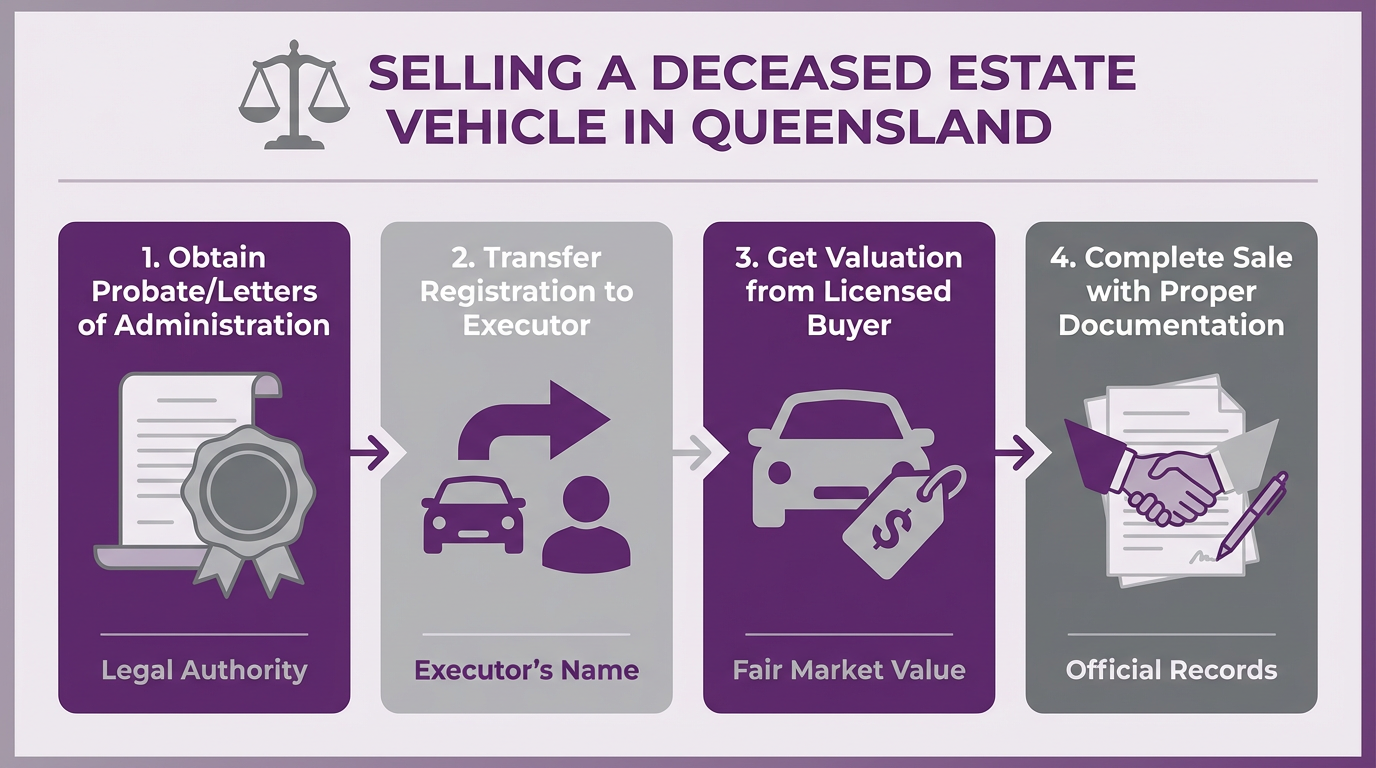
Step 1: Obtain Legal Authority
Before you can do anything with the vehicle, you need legal authority to act on behalf of the estate. This typically means:
If there was a will:
- The executor named in the will can apply for a Grant of Probate through the Supreme Court
- Once granted, this gives the executor legal authority to deal with the estate's assets
If there was no will (intestate):
- Someone (usually next of kin) must apply for Letters of Administration
- This is also through the Supreme Court and gives similar authority
The probate process can take several weeks to months, depending on the complexity of the estate.
Step 2: Transfer the Vehicle to the Estate or Executor
With probate or letters of administration granted, you can transfer the vehicle registration. You'll need to visit a Department of Transport and Main Roads (TMR) service centre with:
- Certified copy of the death certificate
- Certified copy of probate or letters of administration
- Your identification (as executor/administrator)
- The vehicle's registration certificate (if available)
TMR will update the records to show the vehicle is held by the estate.
Step 3: Sell the Vehicle
Once the registration is properly transferred, you can sell the vehicle just like any other. As executor, you'll sign all paperwork on behalf of the estate.
Small Estates: A Simpler Process
If the estate is small (assets under $150,000 in Queensland, excluding the family home), you may be able to use a simpler process.
For a deceased estate vehicle specifically, if the car is the only significant asset, you might be able to transfer or sell it without full probate by:
- Providing a death certificate
- Completing a statutory declaration as next of kin
- Showing proof of your relationship to the deceased
Check with TMR about their requirements for small estates, as these can vary.
Special Circumstances
Joint Ownership
If the vehicle was jointly owned (common with married couples), it may automatically pass to the surviving owner without needing to go through probate. You'll need the death certificate and marriage certificate (or other proof of relationship) to update the registration.
Finance Owing
If the deceased had a car loan, this becomes a debt of the estate. Options include:
- Paying off the loan from estate funds
- Negotiating with the lender to sell the car and pay them directly
- Letting the lender repossess if the estate can't cover the debt
Unregistered Vehicles
If the registration lapsed before or after the death, the process is essentially the same. You'll need to prove your authority to deal with the estate, and the buyer will need to get a safety certificate before re-registering.
Practical Tips for Executors
Based on our experience helping families sell estate vehicles, here are some practical suggestions:
1. Don't Rush
Take time to get the legal paperwork right. Trying to sell before you have proper authority can cause problems and delays.
2. Secure the Vehicle
Make sure the car is safely stored while you organise paperwork. Keep up insurance if possible - you're responsible for the vehicle as executor.
3. Find All the Keys and Documents
Search for spare keys, the registration certificate, service history, and owner's manual. These all help with the sale.
4. Get a Realistic Valuation
As an executor, you have a duty to get fair value for estate assets. Get a few quotes to ensure you're getting a reasonable price.
5. Keep Records
Document everything for the estate records. Keep copies of all paperwork, quotes, and the final sale agreement.
Options for Selling Estate Vehicles
Once you have the legal authority, you have several options:
Private Sale
Potentially higher price, but requires time and effort. You'll need a safety certificate and need to handle viewings, negotiations, and paperwork.
Dealer Trade-In
Quick and easy if someone in the family is buying a car. Dealers often offer less than private sale value.
Cash for Cars Services
Often the most practical choice for executors because:
- Quick and hassle-free
- No need for safety certificate
- They come to you
- Handle paperwork
- Buy vehicles in any condition
- Pay cash immediately
This is particularly helpful when the car has been sitting for months during the probate process and may not be in good condition.
What to Watch Out For
Scammers Targeting Estates
Unfortunately, some unscrupulous operators target grieving families with lowball offers, knowing they may be eager to resolve things quickly. Always:
- Get multiple quotes
- Deal with established, licensed businesses
- Never feel pressured to accept an offer immediately
Tax Implications
Selling an estate asset may have capital gains tax implications. If the vehicle was worth significant money, consider speaking to an accountant or the estate solicitor.
Family Disputes
Sometimes family members disagree about what should happen to a car. As executor, your duty is to the estate and following the will. Document your decisions and get legal advice if disputes arise.
We're Here to Help
We understand that selling a deceased estate vehicle is about more than just the car - it's part of saying goodbye. Our team handles these situations with respect and makes the process as easy as possible.
Contact us for a no-pressure quote. We can work with your timeline, handle the paperwork, and give you a fair price - whether the car is in perfect condition or hasn't been driven in months.