Selling a car should be simple, but the paperwork side of things trips up plenty of Queensland sellers. Get it wrong and you could face fines, disputes, or even find yourself still legally responsible for a car you sold months ago. Let's break down exactly what you need.
The Essential Documents Checklist
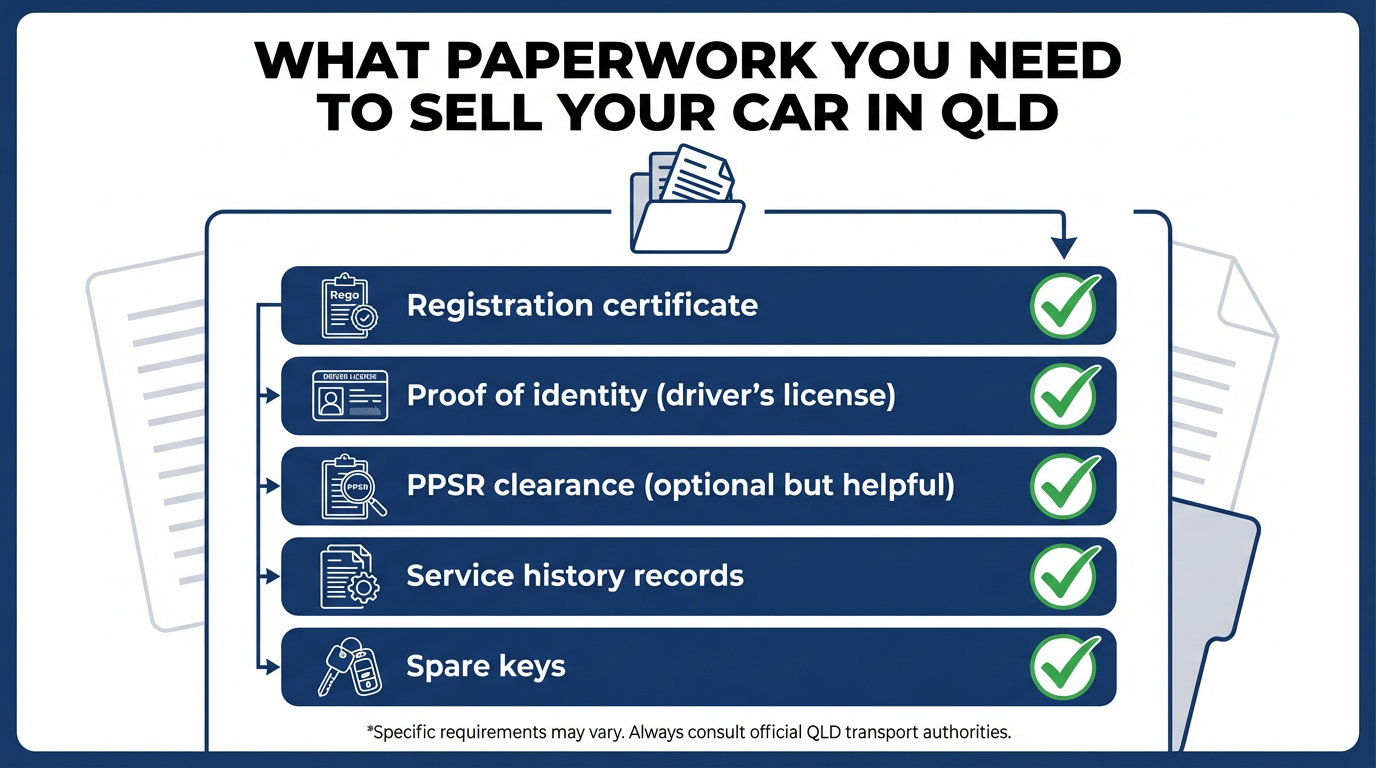
Before you list your car or accept any offers, make sure you have these documents sorted:
1. Certificate of Registration
This is your main proof of ownership. It shows the registered operator's details and the vehicle's registration status. If you've lost it, you can order a replacement through the TMR website or at a transport service centre.
Pro tip: Make sure the name on the registration matches your ID. If it doesn't (common after marriage or moving), you might need to update it before selling.
2. Valid Photo ID
You'll need to prove you are who you say you are. Acceptable forms include:
- Queensland driver's licence (preferred)
- Australian passport
- Proof of age card
3. Safety Certificate (Roadworthy)
In Queensland, you need a valid safety certificate to sell a registered vehicle. This certificate:
- Is valid for 2 months or 2,000km (whichever comes first)
- Must be obtained from a licensed inspection station
- Costs around $80-$150 depending on the vehicle type
Exception: You don't need a safety certificate if you're selling to a licensed motor dealer, or if the car is unregistered.
4. Transfer of Registration Form (Form 3)
This is the official document that transfers ownership from you to the buyer. You can:
- Complete it online through TMR's secure online service
- Download and print Form 3 from the TMR website
- Pick one up from any transport service centre
Both buyer and seller need to sign this form. The buyer then submits it to TMR to complete the transfer.
Recommended (But Not Required) Documents
These aren't legally required, but they'll help your sale go smoothly and potentially get you a better price:
Service History and Receipts
A complete service history shows buyers you've looked after the car. Keep all receipts for:
- Regular services
- Major repairs
- New tyres, batteries, etc.
Owner's Manual
It seems minor, but buyers appreciate having the original manual. It shows the car's complete and you're organised.
Spare Keys
Having all original keys can add value, especially for newer vehicles where replacement keys are expensive.
PPSR Search Certificate
A PPSR (Personal Property Securities Register) search shows the buyer there's no money owing on the car. You can run one for about $2-3 through the official PPSR website. It's not required, but smart buyers will ask for it.
Step-by-Step: Completing the Sale Legally
Step 1: Gather Your Documents
Get your registration certificate, ID, and safety certificate (if needed) together. Make copies for your records.
Step 2: Agree on Price and Payment
Once you and the buyer agree on a price, decide how payment will be made. For private sales:
- Cash is safest for smaller amounts
- Bank transfer should be confirmed before handing over keys
- Bank cheque can be verified by the issuing bank
Never accept a personal cheque - they can bounce.
Step 3: Complete the Transfer Form
Fill out Form 3 with the buyer. Both parties sign, and the buyer takes responsibility for submitting it to TMR within 14 days.
Step 4: Notify TMR of the Sale
This is crucial. Even after signing the transfer form, notify TMR that you've sold the vehicle. You can do this:
- Online through your TMR account
- Over the phone
- In person at a service centre
This protects you if the buyer doesn't complete the transfer. Without notification, you could be liable for tolls, fines, or incidents involving the car.
Step 5: Hand Over Everything
Give the buyer:
- All keys
- The safety certificate
- Your signed portion of the transfer form
- Service history and manuals
What About Selling to a Dealer or Cash for Cars Service?
The paperwork is much simpler when selling to a licensed buyer. They handle most of the administrative work, including:
- Transfer form submission
- TMR notification
- PPSR checks
You just need your ID and proof of ownership. If you don't have the registration certificate, they can usually work with a statutory declaration.
Common Paperwork Mistakes to Avoid
Mistake 1: Not Notifying TMR
The biggest mistake sellers make. If you don't notify TMR and the buyer doesn't complete the transfer, you're still the registered operator. That means you're liable for anything that happens with that car.
Mistake 2: Accepting Deposits and Waiting
Taking a deposit and agreeing to hold the car is risky. If things fall through, you've lost time and potentially other buyers. Cash for cars services pay in full on the spot - much simpler.
Mistake 3: Not Getting a Receipt
Always get or give a receipt for the sale. Include the date, vehicle details, price, and both parties' details. Keep it for your records.
Need Help? We Make It Easy
If paperwork isn't your thing, or you just want the car gone with minimum fuss, contact our team. We handle all the documentation and pay cash on pickup. No safety certificate needed, no forms to fill out yourself.